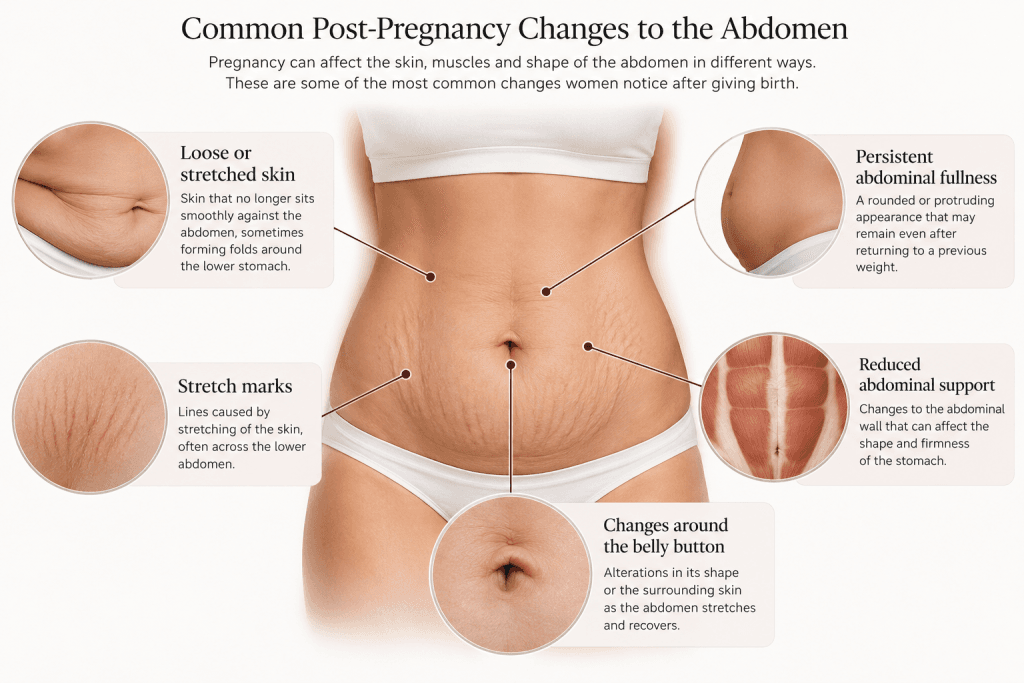
Pregnancy brings many changes to the body, and the abdomen does not always return to its previous shape, even with regular exercise and a healthy lifestyle. While some women find their skin gradually regains its firmness, others notice loose skin, a softer lower stomach or a change in their waistline that remains long after giving birth.
These changes can have different causes. Sometimes the main concern is stretched skin, while in other cases the abdominal muscles and surrounding tissues have also changed. Understanding what is contributing to the appearance of your stomach is important because there are different ways to address these concerns, and surgery is not always necessary.
At FACEMED in Billericay, Essex, we assess the abdominal skin, underlying tissues and overall body proportions to help determine whether a tummy tuck, also known as abdominoplasty, could be suitable.
Why Does Your Stomach Look Different After Pregnancy?
During pregnancy, the skin and connective tissues of the abdomen stretch to accommodate your growing baby. The abdominal muscles also adapt, with the two sides of the rectus abdominis moving further apart as the stomach expands.
After childbirth, the body gradually recovers, and many of these changes improve naturally. However, recovery varies from person to person and is influenced by skin elasticity, genetics, the number of pregnancies, weight changes and how much the abdominal tissues have stretched.
For some women, this means the stomach remains softer or less firm than before pregnancy, even after returning to their previous weight.
Can Exercise Tighten Loose Stomach Skin After Pregnancy?
Exercise is an important part of rebuilding abdominal strength, improving posture and supporting overall fitness after pregnancy. However, while it can strengthen the muscles, it cannot always restore stretched skin to its previous firmness.
Our skin contains collagen and elastin fibres that help it stretch and recover. When the skin has been stretched significantly, these fibres may not fully return to their original condition, particularly following multiple pregnancies or substantial weight changes.
This is why some women continue to notice loose abdominal skin despite maintaining a healthy weight and exercising regularly.
Targeted exercises, particularly with guidance from a postnatal physiotherapist, can also help improve abdominal muscle function. However, they cannot remove excess skin and may not fully correct more significant abdominal wall separation.
The key is understanding whether the main concern is loose skin, changes to the abdominal muscles, localised fat or a combination of these factors.
What Is a Tummy Tuck and How Does It Work?
A tummy tuck, or abdominoplasty, is a surgical procedure designed to create a smoother, firmer abdominal contour by removing excess skin and, where appropriate, tightening the underlying abdominal wall.
For women who have experienced significant changes to their abdomen following pregnancy, it can help address loose skin and changes to the abdominal tissues that have not improved through exercise or weight management.
During a full tummy tuck, the surgeon makes an incision across the lower abdomen, removes excess skin and carefully repositions the remaining skin to create a smoother appearance. The belly button is usually brought through a new opening in the repositioned skin.
If the abdominal wall also requires tightening, this can be carried out during the same procedure. Your surgeon will recommend an approach based on your anatomy, the amount of excess skin and the improvements you would like to achieve.
A tummy tuck is not a weight-loss procedure. Instead, it focuses on improving the shape and contour of the abdomen by addressing changes that exercise and weight management alone cannot always resolve.
Can a Tummy Tuck Tighten Abdominal Muscles After Pregnancy?
Yes. When appropriate, a tummy tuck can include tightening of the abdominal wall to help improve the shape and support of the stomach.
During pregnancy, the connective tissue between the two rectus abdominis muscles stretches as the abdomen grows. In some women, this separation remains more noticeable after childbirth. This is known as diastasis recti and can contribute to a rounded or protruding abdominal appearance.
Although commonly described as muscle separation, it does not necessarily mean the muscles have been damaged or torn. Instead, the connective tissue between them has stretched or widened.
Where appropriate, your surgeon can use internal sutures to bring the abdominal wall tissues closer together. This is often called muscle repair, although it generally involves tightening the connective tissue rather than repairing torn muscle fibres.
Not everyone with abdominal separation needs surgery. Postnatal physiotherapy and progressive strengthening exercises can improve muscle function and symptoms, particularly when the changes are less pronounced.
At FACEMED, we assess whether abdominal wall tightening would be beneficial alongside skin removal, ensuring that any recommended procedure is appropriate for your individual concerns.
Will a Tummy Tuck Remove Stretch Marks?
A tummy tuck may remove some stretch marks, depending on where they are located.
Stretch marks across the lower abdomen may be removed along with the excess skin during surgery. Those higher up the stomach will usually remain, although their position may change as the skin is repositioned.
While reducing the appearance of some stretch marks can be an additional benefit, the main purpose of abdominoplasty is to improve abdominal shape and contour rather than specifically treat stretch marks.
When Is the Best Time to Have a Tummy Tuck After Pregnancy?
Giving your body enough time to recover after childbirth is important before considering any abdominal surgery. There is no single timeframe that suits everyone, as recovery depends on your individual circumstances.
For many women, waiting at least six to twelve months after delivery allows time for the body to recover and weight to stabilise. Some may benefit from waiting longer, particularly if they are breastfeeding or still experiencing physical changes.
Before considering a tummy tuck, it is helpful to think about the following:
- Stable weight: Your weight has settled and is no longer changing significantly.
- Physical recovery: You have recovered well from pregnancy and childbirth.
- Breastfeeding: You have finished breastfeeding and allowed your body time to adjust.
- Future pregnancies: You have considered whether you would like more children.
- Support at home: You can arrange help with everyday activities while you recover.
Although pregnancy after a tummy tuck is possible, another pregnancy may stretch the abdominal tissues again and affect the results. This is why many women prefer to wait until they have completed their family before considering surgery.
It is also worth planning ahead if you have young children. During the early stages of recovery, lifting restrictions and reduced mobility may mean you need additional help with childcare and household activities.
How Do You Know Whether You Need a Tummy Tuck?
The most useful starting point is understanding what is contributing to the shape of your abdomen, rather than assuming that a particular procedure is needed.
If loose skin is the main concern, particularly when it forms folds around the lower stomach, a tummy tuck may be worth considering. If your abdomen remains rounded despite a stable weight, an assessment can help establish whether abdominal wall separation, fat distribution or another factor is responsible.
For women with good skin elasticity but areas of stubborn fat, a different approach may be more appropriate. FACEMED also offers liposculpture and body contouring to address selected concerns.
Where skin laxity is relatively mild, BodyTite may be an option for suitable patients. However, it cannot remove significant amounts of loose skin or correct substantial abdominal wall separation, so it is not a direct alternative to a tummy tuck in every case.
It is also important to recognise that a protruding abdomen is not always a cosmetic concern. Conditions such as a hernia or persistent abdominal wall dysfunction may require further investigation or a different treatment approach.
During your consultation, we look at the overall picture, including your anatomy, concerns and expectations, to help you understand whether surgery is appropriate and what improvements may realistically be achieved.
Frequently Asked Questions About Tummy Tucks After Pregnancy
Can a Tummy Tuck Give Me a Completely Flat Stomach?
A tummy tuck can create a smoother, firmer abdominal contour by removing excess skin and, where appropriate, tightening the abdominal wall. However, the final result depends on your natural anatomy, fat distribution, skin quality and underlying abdominal structure. Your surgeon will explain what improvements are realistically achievable.
Can I Have a Tummy Tuck After a C-Section?
Yes, many women who have previously had a caesarean section can still be suitable for a tummy tuck. Your surgeon will assess your existing scar, abdominal tissues and any changes associated with previous surgery before recommending the most appropriate approach.
Will My Stomach Become Loose Again After a Tummy Tuck?
The excess skin removed during surgery does not return, although the remaining skin and tissues can continue to change naturally with ageing, weight fluctuations or future pregnancies. Maintaining a relatively stable weight can help support longer-lasting results.
Does a Tummy Tuck Help With Diastasis Recti?
Yes, where abdominal wall separation is contributing to the shape of your stomach, tightening the connective tissue may be included as part of a tummy tuck. However, not everyone with diastasis recti needs surgery, and specialist physiotherapy may be beneficial before considering an operation.
Considering a Tummy Tuck After Pregnancy in Essex?
If pregnancy has left you with loose abdominal skin, persistent fullness or changes to your abdominal wall, understanding the cause is the first step towards deciding what may help.
At FACEMED in Crays Hill, Billericay, Essex, our Plastic Surgeons provide personalised assessments for abdominoplasty and mini abdominoplasty. We take time to understand your concerns, assess your anatomy and discuss the available options, including what surgery could realistically achieve and what recovery would involve.
Book a consultation at FACEMED to explore whether a tummy tuck could help you achieve a smoother, firmer abdominal contour following pregnancy.