For many people considering surgery, most of the research initially focuses on the procedure itself. What will the result look like? How long will recovery take? When can I return to work?
One part of the surgical journey that receives far less attention is what happens during the first few hours after the operation.
While many procedures at FACEMED can be performed as day surgery, some operations may require an overnight stay. In these cases, remaining within the medical centre after surgery gives our clinical team additional time to monitor your recovery before you return home.
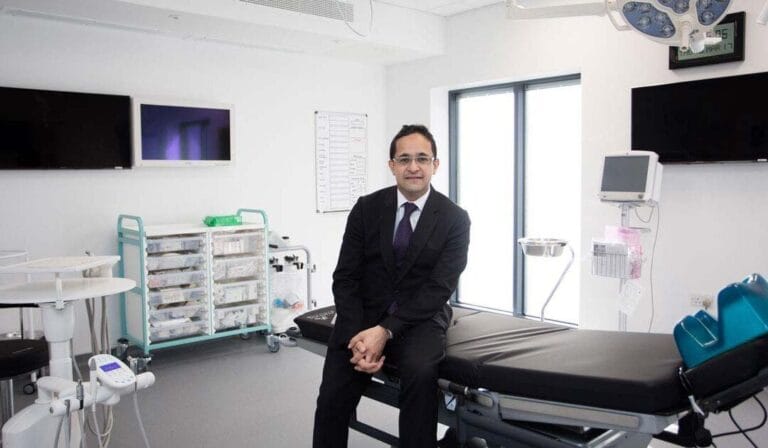
FACEMED is a purpose-built, CQC-regulated Independent Hospital in Crays Hill, Billericay, with surgical facilities for a range of elective procedures. For patients undergoing more extensive surgery, having the option of overnight care means the immediate post-operative period can form part of the planned surgical pathway rather than having to leave shortly after your procedure.
Why might I need an overnight stay after surgery?
Not every operation requires an overnight stay, and a longer stay does not necessarily mean that something has gone wrong.
Whether you go home on the same day or remain overnight depends on several factors, including the procedure being performed, its extent, the type of anaesthesia used, your medical history and how you recover immediately afterwards.
A relatively minor procedure performed under local anaesthesia or sedation may be suitable for day surgery. A longer or more invasive operation may benefit from additional post-operative observation. At FACEMED, surgical planning begins before the day of the operation. Your surgeon can explain whether your procedure is expected to be carried out as a day case or whether an overnight stay should be incorporated into your treatment plan.
What happens during an overnight stay after surgery?
The first night after an operation is an important part of early recovery. Anaesthetic effects are wearing off, swelling may begin to develop and patients are adjusting to how the treated area feels.
An overnight stay provides a period of observation before you continue your recovery at home. Your post-operative requirements will depend on the operation you have undergone. The clinical team will follow your recovery and make sure you are progressing appropriately before discharge.
For patients, there is also a practical benefit. Rather than immediately having to think about travelling home and settling into a home environment after a more significant operation, the initial recovery period takes place within the medical setting.
The following day, discharge is based on your individual recovery and the instructions provided by your surgical team.
Which FACEMED procedures may involve an overnight stay?
FACEMED offers a broad range of surgical procedures, but many do not routinely require patients to remain overnight. There are, however, several procedures where an overnight stay may form part of the surgical plan.
Abdominoplasty
Abdominoplasty, commonly called a tummy tuck, is designed to reshape the abdominal area. Depending on the individual patient, surgery can involve removal and tensioning of excess skin, muscle tightening and reshaping of localised fat pockets with liposculpture.
Because this is more extensive than a small day-case procedure, FACEMED advises that abdominoplasty usually requires an overnight stay.
The operation itself can take up to three hours, but the surgical procedure is only one part of the treatment journey. Recovery needs to be planned carefully too. Most patients will need approximately two to three weeks away from work, with normal activities generally being reintroduced over four to six weeks depending on healing and their surgeon’s advice.
An overnight stay is therefore best viewed as the first stage of a much longer, structured recovery rather than as an indication of when someone will feel completely recovered.
Liposuction and fat transfer
Liposuction is used to remove localised areas of unwanted fat and improve body contours, while fat transfer involves carefully transferring a patient’s own fat to another area where additional volume or shaping is desired.
The recovery pathway can vary considerably depending on the extent of treatment. A smaller area of liposuction may be suitable as a day case under local anaesthesia with twilight sedation, while more extensive surgery may require an overnight stay.
Where fat transfer forms part of the treatment plan, the amount of fat being removed, the areas being treated and where the fat is being transferred all need to be considered. Your surgeon will assess the overall extent of surgery and your individual circumstances before deciding whether day surgery or an overnight stay is most appropriate.
Breast surgery
Breast surgery at FACEMED includes procedures designed to enhance, reconstruct or rebalance the breasts, including breast augmentation with implants, breast uplift and surgery to address asymmetry or conditions such as breast hypoplasia and tuberous or tubular breasts.
The surgical approach is planned around the individual rather than simply choosing an implant or procedure. Factors such as your existing breast shape, body proportions, the amount of lift or correction required and the result you would like to achieve all influence the surgical plan.
Breast augmentation at FACEMED is mostly performed under general anaesthetic, although selected patients may be suitable for twilight sedation. Where twilight sedation is appropriate, we advise that patients can return home the same day.
For patients undergoing more involved breast surgery, your Consultant Plastic Surgeon will explain the anaesthetic, expected recovery and whether day surgery or additional post-operative care is appropriate for your individual procedure.
Face and neck lift surgery
Face and neck lift surgery is used when changes such as facial tissue descent, jowling or more significant skin and soft-tissue laxity cannot be adequately addressed with non-surgical treatments alone.
We take a layer-by-layer approach to facelift surgery, with the aim of rebalancing facial volume and repositioning tissues while maintaining natural facial proportions. A neck lift, or platysmaplasty, can also be performed to address loose skin and tissue around the neck and jawline, and may be combined with other facial procedures where appropriate.
The extent of surgery varies considerably between patients. Facelift surgery usually takes between one and four hours, with certain procedures suitable for twilight sedation. Recovery also depends on the operation performed, although patients having facelift surgery are generally advised to plan around two weeks away from work.
Your surgeon will determine the most appropriate surgical and anaesthetic approach following a detailed assessment and explain whether your procedure is planned as day surgery or requires a different post-operative pathway.
Does having an overnight stay mean my surgery is more serious?
The requirement for overnight care is influenced by the extent of surgery, anaesthesia, your individual health and the recovery expected following the particular procedure.
At FACEMED, we also perform a number of operations as day cases. For example, eyelid surgery, rhinoplasty, otoplasty, brachioplasty can often be performed under local anaesthesia with or without twilight sedation, while some facial procedures and less extensive operations may also allow patients to return home on the same day.
The aim is not to keep every surgical patient overnight. Equally, it is not to send every patient home as quickly as possible. The appropriate pathway is the one that reflects the procedure and the individual patient.
Is an overnight stay the same as my full recovery period?
No, and this is an important distinction when planning time away from work, childcare or other responsibilities. An overnight stay covers the immediate post-operative period. Healing continues for days, weeks and, in some respects, months afterwards.
Swelling, bruising, tightness and changes in sensation can all form part of recovery depending on the operation. Body-contouring patients may also need compression garments, while other procedures have their own specific wound-care and activity instructions. Your surgeon will explain what applies to your operation.
Patients sometimes understandably focus on when they can leave the medical centre, but a better question is often: what will I realistically be able to do during each stage of my recovery? Returning home is only one milestone.
How do I know whether I will need to stay overnight?
This should be established as part of your surgical consultation and pre-operative planning. The same operation can sometimes involve different levels of intervention depending on anatomy and the changes being addressed. Your general health, previous medical history, anaesthetic requirements and proposed combination of procedures can also affect the plan.
For this reason, it is difficult to decide whether you will require an overnight stay simply by comparing your planned operation with somebody else’s experience online.
At FACEMED, your Consultant Surgeon can assess what is appropriate for you and explain the expected surgical and recovery pathway before you proceed.
Planning for your first few days after surgery
Whether you stay overnight or return home on the day of surgery, preparation can make the early recovery period considerably easier.
Before your operation, make sure you understand who will take you home when you are discharged, whether somebody needs to stay with you, what medication or dressings are required and what activities you should avoid.
It is also worth planning beyond the first 24 hours. Arrange help with children, pets, shopping and household tasks where necessary, and avoid assuming that being discharged means you are immediately ready to resume your usual routine.
Following your surgeon’s post-operative instructions and attending scheduled follow-up appointments are important parts of the surgical process.
Frequently Asked Questions
Can someone stay overnight with me at FACEMED?
Arrangements surrounding visitors or accompanying relatives should be discussed with the FACEMED surgical team before your procedure, as requirements may vary according to your surgery and individual circumstances.
What should I bring for an overnight surgical stay?
Your surgical team will advise you what you need to bring. Keeping belongings simple is usually sensible, with comfortable clothing for discharge and any personal essentials you have been advised to bring.
Will I definitely go home the morning after surgery?
Discharge is based on your recovery rather than simply the time of day. Your clinical team will determine when it is appropriate for you to leave and will provide the relevant post-operative instructions.
Can I drive myself home after an overnight stay?
You should make suitable transport arrangements in advance and follow the specific advice given by your surgical and anaesthetic team. Do not assume that staying overnight automatically means you will be able to drive the following day.
Do all general anaesthetic procedures require an overnight stay?
No. Anaesthesia is only one consideration. The operation, its extent, your health and your post-operative recovery all influence whether day surgery or an overnight stay is appropriate.
Considering Surgery at FACEMED in Billericay?
Choosing surgery involves more than deciding which procedure you would like. Understanding how the operation will be performed, what level of post-operative care is appropriate and what recovery will realistically involve are equally important parts of making an informed decision.
At FACEMED in Crays Hill, Billericay, surgical patients are assessed individually and their treatment and recovery pathway planned around the procedure being undertaken and their clinical needs.
If you are considering surgery and would like to understand whether a day-case procedure or overnight stay may be appropriate, book a consultation with the FACEMED surgical team. FACEMED welcomes patients from Billericay, Brentwood, Chelmsford, Basildon, Wickford, Shenfield, Ingatestone and across Essex.